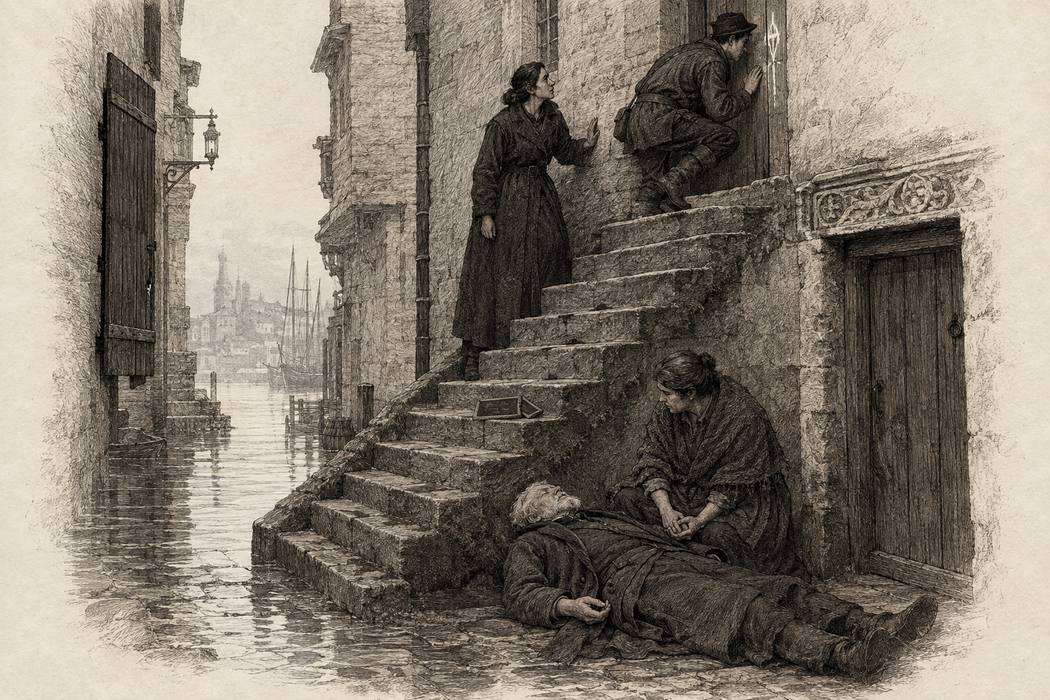
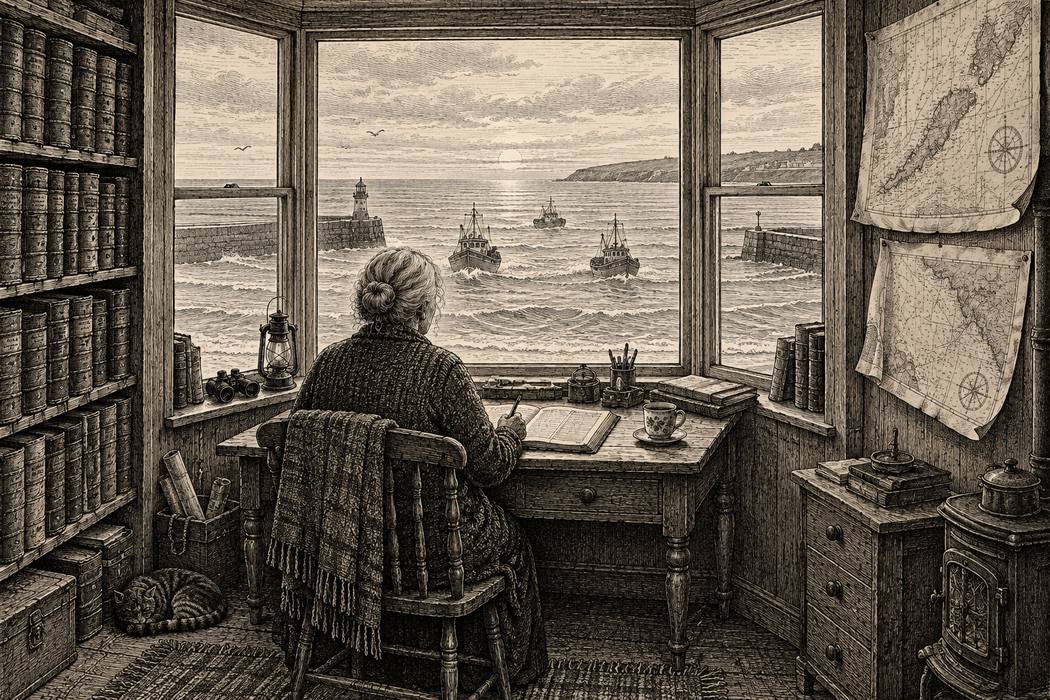
The Flood Chronicles is a strategy game played by letter: a complex world that grows each week from deep lore and its players' own creativity. Armidion is the next continent. It has ten seats, and it opens as soon as seven players have committed. Committing is free, and nothing is paid until the world opens.
Most games hand you a story. This one waits for yours. You rule a realm that survived a great Flood. You decide who its people are, what they believe and what they will risk. Each week you write what your ruler does, and a Game Master reads every letter, weighs it against everyone else's, and answers with what the world did in return.
Out of those letters grows a history that nobody planned: alliances and betrayals, festivals and sieges, laws, faiths and feuds, and now and then a lake where farmland used to be.
Flexible by design
There is no menu of factions and no list of permitted moves. The game's strength is open creativity: the rules govern the process, not your imagination.
A turn can be one sentence or five pages. Light weeks and deep weeks both work.
Your realm can be anything a broken world could hold: a merchant republic, an iron order, a horse people, a theocracy, a city that trades in secrets.
Write to other rulers in character. Your letters are delivered word for word.
Write in English, German or Mandarin.
Miss a deadline and your realm is played in character for that week, so the world never stalls.
The game flexes to your time. It does not flex on consequences.
A short film of the world Armidion belongs to.
❖
What players have already written
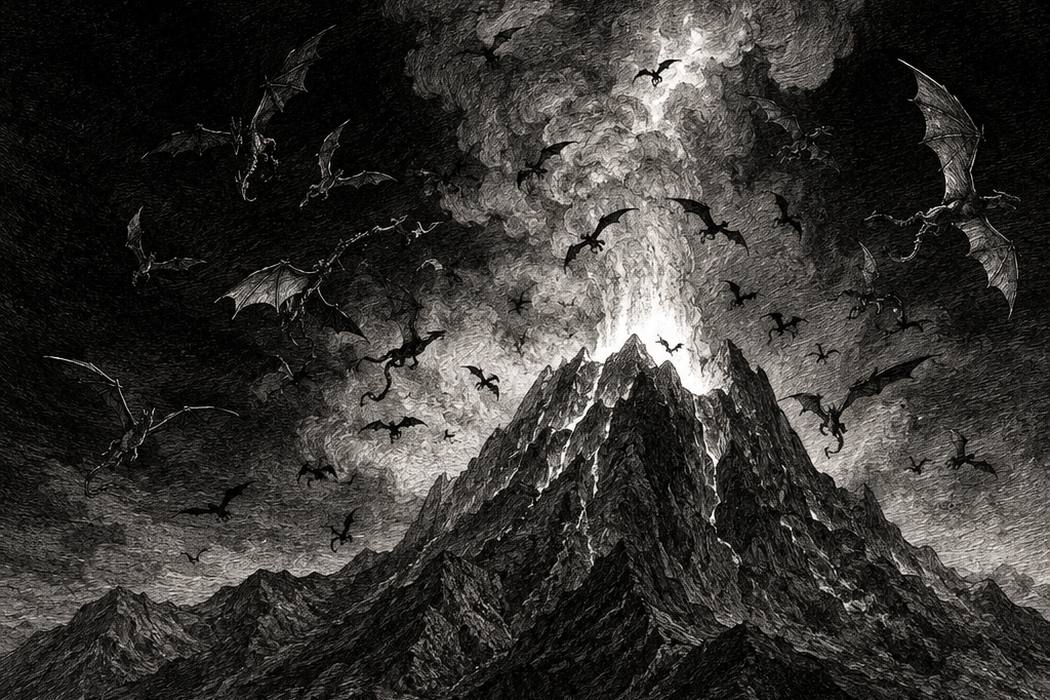
The mountain that rose in the Burning. Illustration made for the game with AI image tools; the events were decided in play.
The first two worlds, Vethara and Calderis, opened this year. In the thirteenth week the holy mountain of Pyrran failed and took a peninsula with it. A new range rose, and a lake two hundred and fifty miles long opened where farmland had been. The two worlds were driven into one: the Western Reaches.
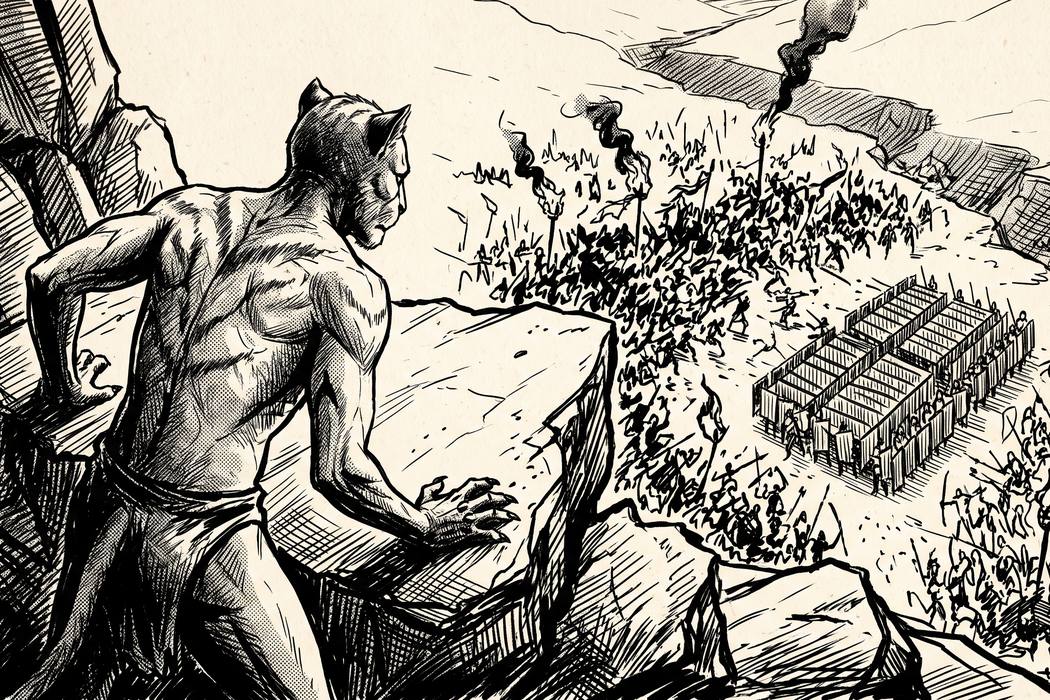
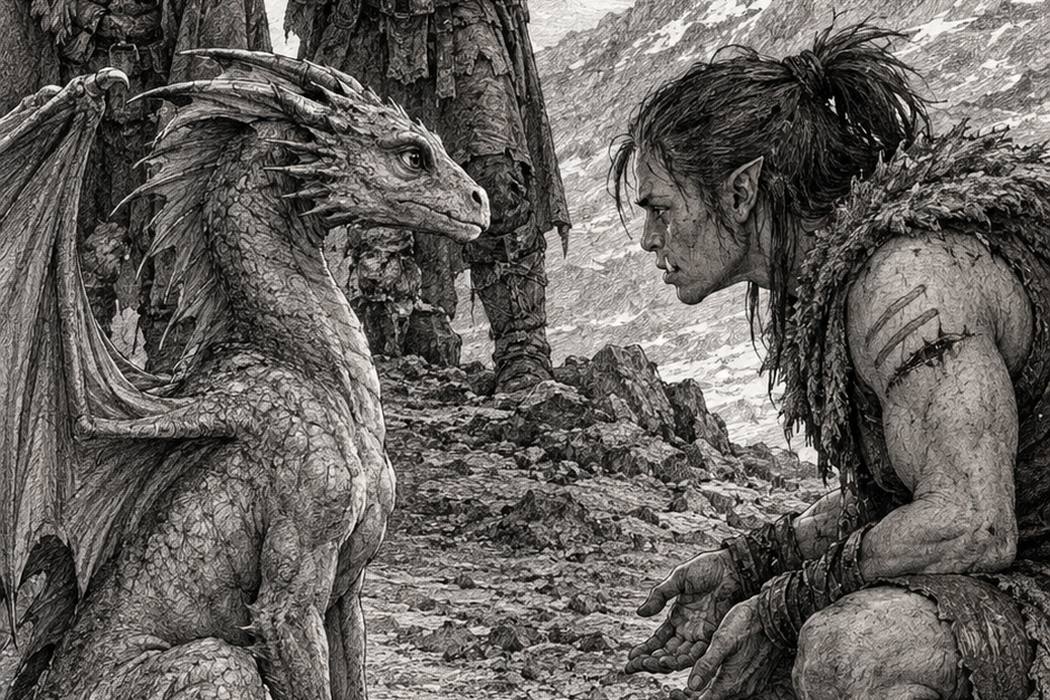
Then the courts answered. A king settled four orc peoples inside his walls. When an ally wanted a dragon egg, the orc guides refused, and the king backed them: leave the eggs. A week later a different court took an egg, and the blast was heard two realms away. A queen joined two cities under one crown and put a toll on the new water. A duke answered a sea-queen's siege with one sentence: she would have to take the castle from his dead hands.
Five realms there are ruled by players from around the world: a merchant-prince who sells information before goods, a sea-queen who conquered a salt-city, a market warden who now governs a closed mountain country, an iron marshal who runs his realm like an order-book, and a merchant oligarchy that hosted a festival at another city's expense. The rest move under the Game Master's hand.
Every game grows from Isrogant, a fantasy world in development since the 1980s. Its history is long and complete: an Age of Wonders, a century of Mage Wars, and the empire of Adjagard, which held much of the world together for a thousand years until the Great Flood drowned it.
That history sets the rules, and the rules give the world its weight:
Magic is rare, dangerous and outlawed in most places.
There is no gunpowder. Wars are fought with steel, siege engines, ships and cunning.
Dwarves are engineers and bankers, trusted because they belong to no side.
Orcs are not monsters but a proud and complicated people.
News travels at the speed of a horse, and arrives late, partial or wrong.
Each game opens a little over a year after the Flood, on a new continent seeded from that lore. The past is deep and fixed. The future belongs to the players.
An old game, matured
The Flood Chronicles is not a new idea. More than thirty years ago, a play-by-mail game called Die Wunder von Isrogant was run by hand in a German grammar school. Letters went out, letters came back, and the game grew to fourteen players.
Their realms, rulers, wars and faiths became the raw material of a world. Refined over decades, it is now Isrogant, published in German: the In Isrogant anthologies, the Reisende trilogy, Diktatur and Flammen über Drachstaad. English editions are in preparation.
The Flood Chronicles is that same game, matured and moved to email. The principle has not changed: you write what your ruler does, a Game Master answers, and the world keeps what you made. The best ideas from play can still find their way into Isrogant itself, as they always have.
❖
Game Master led. AI supported.
A person reads every letter. That is the heart of the game, and it is not delegated.
The Game Master
reads every letter
rules on every outcome
adds the weather, the rumours and the realms nobody plays
rewrites whatever needs rewriting
approves every word before it is sent
The AI
keeps the records of every realm
drafts the newspaper and the result letters
proposes consequences for the Game Master to accept, change or reject
helps with maps and illustrations
The machine never decides what happens. Nothing reaches a player until a person has read it and approved it. When this game was run by hand, every turn cost a week of clerical work. The AI does that work now, so the human hours go into reading your letter properly.
The differenceSlop is content nobody meant. Here every turn starts with players' decisions and ends with a human ruling. The apprentice, never the author.
❖
How a week works
You write
Orders, plans, letters to other rulers, the gossip of your court if you like. One email, at any length.
The Game Master resolves the week
Every player's letter is weighed together with the weather, the rumours and the realms nobody plays.
You read your result
A private letter that opens with Events at Court, the lives of the people around you, then the account of your orders and the State of the Realm as your advisors report it.
Everyone reads the Edö Messenger
The world's newspaper: biased, often wrong, and worth reading between the lines. Often a new map arrives too. Then you write again. No app, no login.
How Armidion begins
Seven players commit
Armidion has ten seats and opens as soon as seven are taken. Committing is free, and you can withdraw at any time.
Each ruler describes their realm
Its people, beliefs, government and ambitions, in as much or as little detail as you like. If you would rather just play, you can begin as the lord or lady of an ordinary feudal city and fill it in later.
The land is seeded around the realms
The continent is raised from Isrogant's lore around the rulers' own descriptions, and the first map is drawn. The map is drawn around the players, not the other way round.
Turn 1 opens
On the first day of Year 1, a little over a year after the Flood. Every realm starts from the same low base. From then on each turn costs £5, paid with the turn. When all ten seats are taken, Armidion closes to new rulers.
The state of Armidion
Status
Taking commitments now.
Seats
Ten. When all ten are taken, Armidion closes to new rulers.
When it opens
As soon as seven players have committed. Everyone who has committed is written to first.
To commit
Free. It holds you to nothing, and you can withdraw at any time.
The world
Not yet drawn — by design. The continent is seeded once its rulers have described their realms.
The age
Will open on the first day of Year 1, a little over a year after the Great Flood; one week passes per turn.
Cost once open
£5 per turn — paid with the turn, as on Calderis. Nothing is due until the world begins and you choose to play.
Resolution
A human game master adjudicates every turn, with Claude as clerk and co-author; nothing reaches you unreviewed.
A note on fairness
Every realm in Armidion will begin from the same low, equal base — the same starting population and treasury — so no one buys an advantage. What you will pay for, once it opens, is a living world and a game master genuinely paying attention. Advantage is earned in play, never at the door.
❖
Read before you decide
Five free tales by Aodhàn Mac-Talla have grown out of the Western Reaches. They are the clearest way to see what this game produces.
Fill this in and your email program opens with a message to armidion@thefloodchronicles.net. Send it, and your seat is noted. We confirm every commitment by email.
❖
Questions
What does committing mean?
That you would like one of Armidion's ten seats. You pay nothing now. As soon as seven players have committed, we write to everyone to begin.
What if fewer than seven commit?
Then Armidion waits, and you owe nothing. You can withdraw at any time with a one-line email.
What happens when all ten seats are taken?
Armidion closes to new rulers, and the next world takes names in its turn.
How much time does it take?
As much as you want to give. A turn can be three lines or five pages. If you miss a deadline, your realm is played in character for that week.
Do I need to know Isrogant?
No. New players receive a short guide to the world's history and rules. Everything after the Flood is new, and you learn it by playing.
Is an AI the Game Master?
No. A person reads every letter, decides every outcome and approves every word that is sent. AI keeps the records and drafts the paperwork.
Can I write in German or Mandarin?
Yes. Players already write in English, German and Mandarin. Choose your language in the form.
What does it cost?
Nothing until Armidion opens. Then £5 a turn, paid with the turn. There is no subscription: if you stop playing, you stop paying.